
Print on Demand Apparel Quality: Durability Guide
Print on demand apparel quality gets a bad rap, and honestly, some of it was earned. But the story has changed. If you're still writing off POD based on a cracked graphic tee from five years ago, you're working with outdated information. This piece breaks down what actually determines whether a printed garment holds up, what causes cheap prints to fail fast, and how to tell the difference before you spend a dollar.
Why Skeptics Have a Point, and Where They're Wrong
Early print-on-demand had real problems. Prints cracked. Colors faded. Garments felt stiff. That reputation stuck for a reason, the technology in the 2010s was inconsistent, and plenty of operators prioritized speed over craft.
The decorated apparel industry has moved fast since then. DTG equipment from manufacturers like Kornit and Brother now produces output that holds up against bulk decoration methods. Sublimation chemistry was always excellent; what's widened is access to quality blanks and reliable production. By 2026, the gap between well-executed POD and mass screen printing has narrowed to the point where, for the right type of design, POD is often the stronger technical choice.
The skeptics aren't wrong to ask hard questions. They're just applying old answers to a different situation.
DTG Printing Quality: How the Process Works
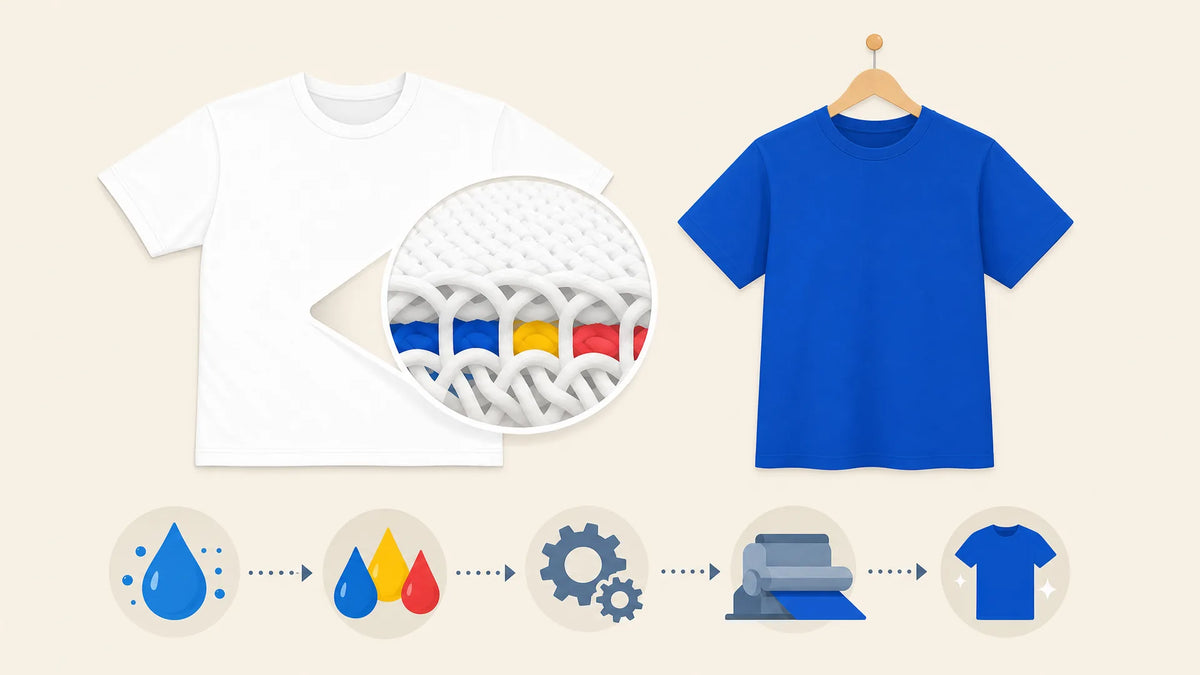
DTG, direct-to-garment, works like an inkjet printer for fabric. Inkjet heads spray water-based pigment directly into the fibers of the garment. Done right, the ink becomes part of the fabric rather than sitting on top of it. Done wrong, it sits on the surface and starts failing the moment heat and water hit it.
Ink Penetration vs. Surface Coating
The difference between a DTG print that lasts and one that doesn't usually comes down to whether the ink actually penetrated the fabric fibers or just coated the surface. Penetration produces soft, flexible prints that move with the garment. Surface coating produces prints that feel like a sticker, and eventually behave like one.
Fabric content drives ink penetration. 100% ring-spun cotton absorbs water-based pigment most efficiently, producing the sharpest color and the best wash durability. Blends above roughly 50% polyester reduce DTG ink absorption noticeably and are better suited to sublimation. This isn't a workaround. It's matching the right process to the right material.
Why Pre-Treatment Is the Hidden Variable
Pre-treatment is a binding agent sprayed onto the garment before printing. It opens up the fabric fibers and gives the water-based ink something to bond with. It also neutralizes the alkalinity in cotton that would otherwise cause colors to dull.
Pre-treatment is the single biggest quality variable most consumers never see. Garments that skip or under-apply it lose ink adhesion after the first few washes, regardless of how good the printer is. That's the primary cause of the cracked, faded prints that gave early POD its bad reputation. Not the ink. Not the machine. The preparation.
After printing, garments go through a heat cure to lock the ink in. Under-cured prints feel tacky and break down fast. Correct cure temperature and dwell time are non-negotiable for dtg printing quality that actually lasts.
Sublimation Print Durability: The All-Over Print Advantage
Sublimation works on a completely different principle. Instead of spraying ink onto fabric, heat converts dye from a solid directly into a gas, which then bonds into polyester fibers at the molecular level. There's no surface layer, the color becomes part of the fiber itself.
Why Sublimation Prints Don't Crack or Peel
Because there's no surface ink film, there's nothing to crack, peel, or lift. Sublimation print durability is a function of the fiber bond itself, which means wash after wash, the print holds its color and sharpness. All-over print hoodies produced via sublimation routinely outlast the garment fabric in terms of print integrity, the color fades less than the fabric eventually wears out.
This makes sublimation the natural choice for bold, edge-to-edge graphics on all-over print hoodie design techniques, pieces where the print is the entire visual statement, not just a chest graphic.
The limitation is real: sublimation only works on light-colored, high-polyester-content fabrics. On cotton or dark backgrounds, it won't bond correctly. That's not a flaw. It's a constraint you design around by choosing the right blank.
At Tenino Ventures, every all-over print hoodie goes through sublimation on high-polyester-content blanks chosen specifically because the process holds vibrancy and detail through the kind of heavy regular wear a statement piece actually gets.
Print on Demand vs. Screen Print: An Honest Comparison
Screen printing has been the industry standard for bulk apparel decoration for decades. It excels at high-opacity solid colors, especially on dark garments, and at volume, the more units you print, the lower the cost per piece. For a brand printing 500 identical black shirts with a two-color logo, screen printing is hard to beat.
For complex, multi-color artwork with gradients, fine detail, or full photographic imagery, which is exactly what bold graphic tees for men tend to feature, DTG and sublimation are often the stronger technical fit. Screen printing separates artwork into individual color layers. Each additional color adds cost and complexity, and photorealistic detail is difficult to reproduce cleanly. DTG prints full-color artwork in a single pass. Sublimation handles edge-to-edge complexity without any increase in production difficulty.
Print on demand vs. screen print isn't a quality argument. It's a use-case argument. Screen printing wins on bulk solids. DTG and sublimation win on detail, color complexity, and small runs. For statement pieces designed to stand out, that trade-off favors POD methods.
Apparel Quality Standards: What to Look for Before You Buy
The garment itself matters as much as the print method. No decoration process rescues a poorly constructed blank.
Fabric Weight and Fiber Content
GSM, grams per square meter, is the standard measure of fabric weight. A lightweight tee runs around 140–160 GSM. A mid-weight tee lands in the 180–200 GSM range, and heavier garments go above that. For everyday wear and wash durability, mid-weight or heavier blanks hold their shape and structure better over time.
Ring-spun cotton produces a smoother, tighter surface than open-end (carded) cotton, it takes DTG ink more evenly and produces sharper prints. For sublimation, look for blanks with a high polyester percentage, ideally 95% or above, to ensure full dye penetration and color vibrancy. These aren't premium-tier luxuries. They're the baseline for apparel quality standards worth calling quality.
Wash and Care Habits That Extend Print Life
How you wash a printed tee matters. Cold water reduces stress on both fabric fibers and ink bonds. Washing inside-out protects the print surface from friction against other garments. High-heat drying is the most common way to accelerate print degradation, it stresses the fibers and can break down adhesion in DTG prints over time. Air drying or low-heat tumble drying extends how long printed tees last more than almost any other single habit.
A well-made DTG shirt cared for correctly will look meaningfully better after 50 washes than the same shirt washed hot on the outside.
How Long Do Printed Tees Last? Setting Real Expectations
A well-made DTG shirt, printed on a quality ring-spun cotton blank with correct pre-treatment and full cure, washed cold inside-out, that shirt holds up for years of regular wear. The print won't look brand new after two years of weekly washes, but it won't crack or fade into illegibility either.
A poorly treated garment, under-prepped, under-cured, on a low-GSM polyester blend, can show visible cracking and color loss within a handful of washes. That's not a POD problem. That's a production standards problem.
Sublimation prints set a different bar entirely. Because the dye is bonded into the fiber, the color integrity typically outlasts the garment. The fabric will eventually pill, thin, or wear at stress points long before the print fades in any meaningful way. Sublimation print durability is, for practical purposes, permanent.
Longevity is a shared responsibility. The producer controls pre-treatment, cure, blank selection, and print method. The buyer controls wash temperature, drying heat, and how the garment is handled. When both are done right, print-on-demand apparel quality competes with anything else on the market.


Leave a comment
This site is protected by hCaptcha and the hCaptcha Privacy Policy and Terms of Service apply.