
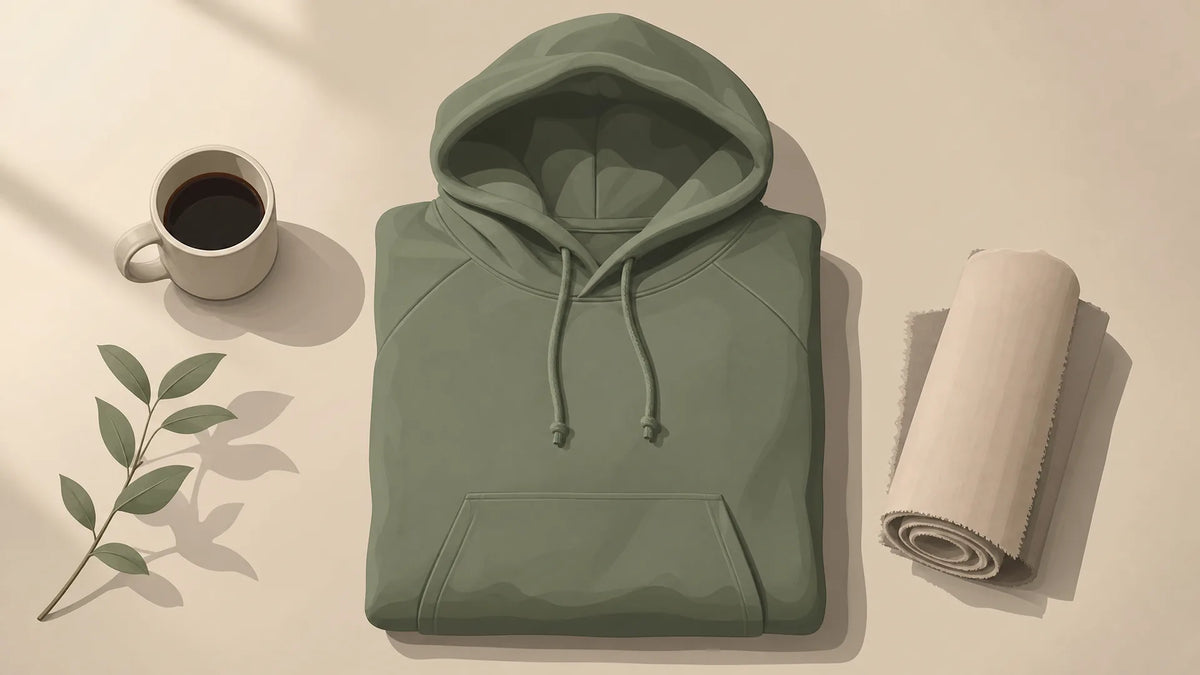
Hoodie Buying Guide: Fit, Fabric Style | Tenino Ventures
A hoodie isn't just something you throw on when you can't be bothered. It's the one piece in your closet that works as hard as you do. Comfortable enough for a lazy Sunday. Bold enough to carry a statement across a crowded room. This guide breaks down every part of the hoodie decision: styles, fits, fabric weight, styling, gifting, and care. By the end, you'll know how to land a piece that actually says something about you.
What Makes a Hoodie a Hoodie (And Why They Never Go Out of Style)
Strip it down and a hoodie is simple: a hood, a kangaroo pocket or clean front, and fleece built for warmth. That simplicity is exactly why it never gets old. You can dress it up, dress it down, or let it be the whole outfit.
Hoodies survive every trend cycle because they're not really a trend. They're a base layer for self-expression, reworked by skaters, musicians, and athletes for the better part of a century.
A Quick History of the Hoodie's Rise From Workwear to Wardrobe Staple
The hoodie started as functional workwear in the 1930s, made for laborers who needed warmth in cold warehouses. According to Britannica, it later got linked to athletes, then hip-hop culture in the 1970s and '80s, then skate and streetwear scenes in the decades after. Each subculture added its own meaning without changing the basic garment.
By the 2020s the hoodie had shed any single identity. It's officewear under a blazer. It's a canvas for graphic art. And it's still the thing you grab off the chair at 6 a.m. That range is the whole point. Few garments flex between "uniform" and "statement piece" the way hoodies do.
Types of Hoodies: Pullover, Zip-Up, Cropped, and All-Over Print
Before you shop, it helps to know what you're actually choosing between. Hoodies split along two main lines: how they open, and how they're decorated.
Format decides how you wear it day to day. Decoration decides whether it reads as basic or as a piece with personality.
Pullover vs. Zip-Up: Which Fits Your Lifestyle
Pullover hoodies go on over the head, no fasteners, no gaps. That makes them warmer, since there's no zipper line letting cold air in. It also gives the front a clean surface for bold graphics or an all-over design.
Zip-up hoodies trade a little warmth for control. You can layer them open over a tee, half-zip for airflow, or seal up completely. If you move between temperatures a lot, gym to street, indoors to out, a zip-up gives you more to work with.
Neither is objectively better. Pullovers lean toward statement pieces and cold-weather wear. Zip-ups lean toward versatility and layering.
All-Over Print Hoodies vs. Basic Logo Hoodies
A basic logo hoodie has a small design, usually screen-printed on the chest. It's fine. It's also what everyone else is wearing.
An all-over print hoodie covers the whole garment in artwork: sleeves, hood, back, all of it. There's no blank space left for the design to feel like an afterthought. Where a small chest logo whispers, an all-over print doesn't hold back.
Production method matters here too. All-over print hoodies use dye-sublimation to print edge-to-edge, including sleeves and hood. That's why the designs don't crack or fade like a basic screen-printed logo does over time. If you want a hoodie that looks like it belongs to you and no one else, this is the format built for it. You can browse the full hoodie collection to see the difference between the two side by side.
How to Choose the Right Hoodie Fit and Fabric Weight
Fit and fabric are where a hoodie either earns its spot in rotation or ends up at the bottom of the drawer. Get these two things right and everything else, style, print, color, falls into place.
Oversized, Regular, or Cropped: Reading Fit Descriptions
Oversized hoodies are cut roomy through the body and sleeves, meant to be worn loose and slouchy. Regular fit follows your actual body shape, closer to what you'd expect from a classic sweatshirt. Cropped fits stop above the waist, built to pair with high-rise bottoms.
Oversized, boxy fits and cropped silhouettes have been trending right alongside classic regular fits. Hoodies now span far more style lanes than plain streetwear ever did. None of these fits is "correct." It depends on the silhouette you're going for and what you're pairing it with.
If you want a full breakdown of how to read size charts and match fit to body type, our deep dive on hoodie fit and style covers it in depth. For an oversized-specific take, the oversized graphic hoodie styling guide is worth a look too.
Fleece Weight and Fabric: What GSM Actually Means
GSM stands for grams per square meter. It's the standard measure of how dense a fabric is. Higher GSM means heavier, thicker fleece.
Heavier fleece, typically in the 300-400 GSM range, is what separates a hoodie that holds its shape wash after wash from one that pills and thins out within a season. Lighter hoodies, under 250 GSM, work fine for mild weather or layering, but they wear out faster and drape less structurally.
When you're comparing hoodies online, check for GSM or fabric weight in the description. It's a better indicator of quality than price alone.
Styling a Hoodie So It Reads as a Statement, Not a Basic
A hoodie in a plain color, worn with sweatpants, reads as loungewear. That's not a bad thing, but it's not the only thing a hoodie can do. Push a little on the styling and the same garment becomes the centerpiece of an outfit.
Layering Ideas for Every Season
In colder months, layer a hoodie under a denim or leather jacket and let the hood sit outside the collar. In spring and fall, an open zip-up hoodie over a plain tee adds texture without adding bulk. In warmer weather, a lightweight hoodie tied around the waist or worn open works as an accent piece rather than a full layer.
The trick with layering bold hoodies is restraint everywhere else. Let the hoodie be the loud piece and keep the rest of the outfit simple.
Pairing Bold Prints With the Rest of Your Fit
An all-over print hoodie already carries visual weight, so the rest of your outfit should stay quiet: solid pants, plain sneakers, minimal accessories. That contrast is what makes the print pop instead of competing with itself.
Color matters too. A bold neon or high-contrast print works best against neutral bottoms, black, gray, denim, so nothing fights for attention. If you want to see how far bold colorways can go, bold neon hoodie trends are worth a look heading into 2027. And for a men's-focused rundown on making graphic hoodies the centerpiece of a fit, check out statement hoodies for men. Women shopping for the same energy can look at all-over print hoodies for women.
Hoodies as Gifts: Matching Sets and Personality-Driven Picks
A hoodie says more about a person than a gift card ever will. Pick one with a design tied to someone's interests, a band, a hobby, an inside joke, and it stops being generic. It becomes something they'd actually pick for themselves.
Matching hoodie sets for couples, friends, and families have grown from a novelty gift into a mainstream category. Hoodies now carry social and relationship meaning, not just warmth. A matching set doesn't need to be identical. Coordinated colors or a shared graphic in different placements works just as well.
When a Hoodie Beats a Generic Gift
Generic gifts get used once and forgotten. A hoodie with a design that actually fits the person gets worn for years. It's practical, it's personal, and unlike a lot of apparel gifts, sizing concerns aside, it doesn't need to be "just right" the way a fitted jacket does.
For friend groups specifically, matching hoodies for best friends is a solid starting point if you're picking something for more than one person at once.
Hoodie Care and Print-on-Demand Quality: What to Look For
How you wash a hoodie decides how long the print survives. Turn it inside out before washing, use cold water, and skip the fabric softener. It breaks down the fibers that hold ink in place. Air dry when you can, or tumble dry on low. High heat is the fastest way to crack a print or shrink the fleece out of shape.
Skip the iron directly on a printed area. If you have to press wrinkles out, do it inside out or use a cloth barrier over the print.
Print-on-demand hoodies are made differently from mass-produced fast fashion, and it shows in the details. Since each hoodie is made to order, a bold or niche design can go from concept to your closet without a brand needing to pre-sell thousands of units first. That means smaller runs, tighter quality control, and designs you won't see on the next five people at a bus stop. If you want more on how that production model stacks up against typical retail garments, how print-on-demand quality holds up walks through the comparison.
A well-made hoodie, heavy fleece, dye-sublimated print, proper fit, holds up for years of washes without fading or losing shape. That's the standard worth shopping for. Not a shirt that blends in, but one built to last while it stands out. When you're ready to see what that looks like, browse the full hoodie collection and find the one that's actually yours.


Leave a comment
This site is protected by hCaptcha and the hCaptcha Privacy Policy and Terms of Service apply.