
Gamer Aesthetic Clothing Brands: Beyond Logo Merch
You can spot a licensed gaming t-shirt from across a room. Big logo, character face, con-swag energy. That's the problem. It screams "fan" instead of "individual."
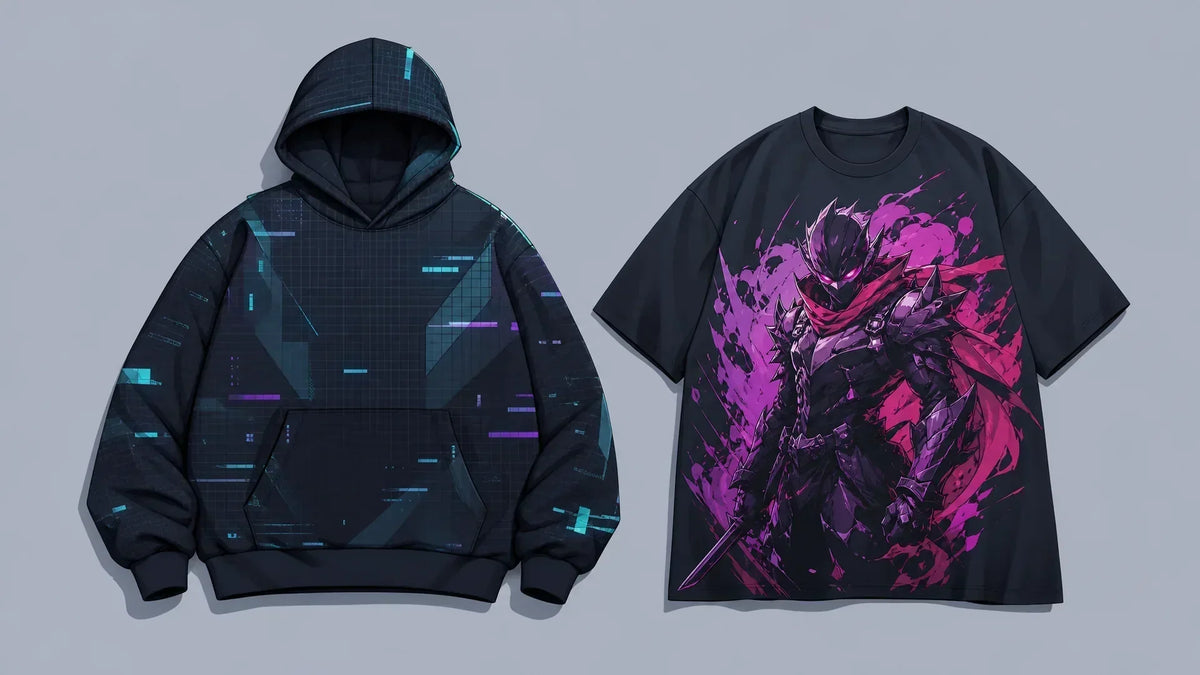
Gamer aesthetic clothing brands do something different. They pull from gaming culture, the color, the glitch, the digital-grid feel, without slapping a franchise logo on your chest. The result reads as personal style, not costume. That's the shift happening in gaming culture fashion right now. Aesthetic-first labels are eating into territory that used to belong to licensed merch.
Why Gaming Culture Fashion Aesthetic Is Replacing Logo Merch
Esports and gaming culture have grown into one of the largest entertainment audiences in the world over the past decade. That audience doesn't just show up for tournament weekends anymore. It dresses like a gamer every day, not just at a con or a launch party. So demand shifted from event-only jerseys toward pieces people actually want to wear on a Tuesday.
That shift matters for anyone shopping right now. You're not buying a costume. You're buying an identity signal that works in normal life.
The Costume Problem With Big-Box Gaming Merch
Licensed gaming merch has one job: sell you a character. A hoodie with a franchise logo across the chest tells everyone which game you play. It doesn't tell anyone who you are.
That's the corporate-sponsored feel a lot of shoppers try to avoid. It's fine for a launch event. It's less fine as your everyday wardrobe, because it reads as advertising for someone else's product, not your own style.
Gamer fashion brands with personality skip the logo entirely. They build the mood of gaming, the neon glow, the glitch texture, the pixel breakdown, into the garment itself. No character required.
What Makes a Gamer Fashion Brand Have Personality
A gamer aesthetic clothing brand builds around visual language instead of intellectual property. Think glitch effects, pixel decay, cyber-grid lines, and color combinations that feel pulled straight from a screen. None of it depends on owning a game license.
That's the core difference between a gamer aesthetic clothing brand and a licensed gaming merch brand. One sells you a mood you can wear anywhere. The other sells you a walking advertisement tied to one specific title.
Neon Gaming Apparel Brands and Color as Signal
Color does a lot of the talking here. Neon gaming apparel brands lean into electric greens, hot magentas, and acid yellows because those shades read as "digital" before anyone even sees the graphic. It's the same visual shorthand as a loading screen or an arcade cabinet glow.
That's why color alone can signal gamer identity without a single game reference on the fabric. A piece can look like it belongs in gaming culture just by how loud and specific its palette is. For a closer look at how this trend plays out across drops, check the guide on neon bold hoodies.
Cyberpunk Gaming Fashion Cues Without the Cosplay
Cyberpunk gaming fashion borrows heavily from dystopian tech visuals: grid lines, circuit patterns, distorted type, high-contrast black-and-neon combos. Worn right, it looks like streetwear that happens to feel futuristic. Worn wrong, it looks like a costume.
The line between the two comes down to restraint and placement. All-over prints and full-garment graphics tend to read as fashion. A single oversized character graphic tends to read as cosplay. The goal is gaming-coded, not gaming-costumed. The deeper style logic behind this is covered in the piece on cyberpunk fashion graphic tees.
Streetwear Brands for Gamers vs Indie Gaming Aesthetic Clothing
Streetwear brands for gamers usually come from the mainstream fashion side, adding gaming references to an existing streetwear label. Indie gaming aesthetic clothing usually comes from the opposite direction: creators who live in gaming culture first and build apparel around it second.
Brands like Bstroy and Cyberdog have shown how this works when it's done well. Gaming-coded fashion sells best when it reads as streetwear first: bold silhouettes, glitch graphics, neon palettes. The gaming reference stays implied instead of logo-stamped. That's the model indie print-on-demand labels have picked up and run with, often faster and cheaper than the bigger names.
Where Streetwear and Indie Labels Diverge
Mainstream streetwear crossovers usually mean higher price points, limited drops, and heavy hype-driven marketing. You're paying partly for the name on the label, not just the print.
Indie and print-on-demand labels flip that equation. Prices tend to stay more accessible. Designs run smaller and more niche. There's real room for a very specific sub-aesthetic, retro pixel, glitch-core, cyber-neon, to exist as its own drop instead of getting diluted to appeal to everyone. The tradeoff: indie labels usually chase distinct micro-aesthetics rather than broad, generic gaming appeal.
That specificity is exactly what makes indie gaming aesthetic clothing feel less costume-y. It's designed for the graphic, not the franchise. For readers interested in how identity-driven labels build that kind of loyalty, the piece on subculture fashion brands built on authenticity covers the broader pattern.
Gaming Hoodies Aesthetic: What to Look For Before You Buy
A gaming hoodie needs to do two jobs. It has to look bold enough to signal the aesthetic, and it has to hold up as an actual wardrobe piece you'll wear for years. Before buying, check these things:
- Print method, does the graphic cover the whole garment or sit as a single chest print?
- Fit, oversized and boxy fits suit streetwear-driven gaming looks better than slim, athletic cuts.
- Colorway boldness, a wearable gaming hoodie should commit to its palette, not water it down to look "safe."
- Versatility, can it stack with jeans, cargos, or layered jackets, or does it only work as a standalone statement piece?
Getting these details right separates a hoodie you'll wear for years from one you'll wear twice. The checklist in statement hoodies with bold graphics walks through more of it.
All-Over Print vs Screen Print for Gaming Graphics
Screen printing works fine for a single chest logo. It's cheap, fast, and durable for simple designs. But it can't handle the edge-to-edge glitch grids or pixel-decay patterns that define gaming aesthetics.
All-over print covers the full garment, sleeves, hood, back panel, everything, which is exactly what cyberpunk-grid and neon-fade graphics need to actually land. If a "gaming aesthetic" hoodie only has a small front print, it's probably closer to merch than to fashion. The technical side of how this production method works gets broken down in all-over print design techniques.
How Print-on-Demand Unlocks Niche Gamer Aesthetics
Print-on-demand changed what's possible for niche gaming aesthetics. Traditional apparel manufacturing needs minimum order quantities. A brand has to bet on a design selling in bulk before it ever prints it. That kills off most micro-niche ideas before they get a chance.
The rise of all-over print technology let small labels produce cyberpunk-grid, glitch-core, and pixel-decay patterns that would have cost too much with traditional screen printing. Each design only needs to sell in small runs to be worth making.
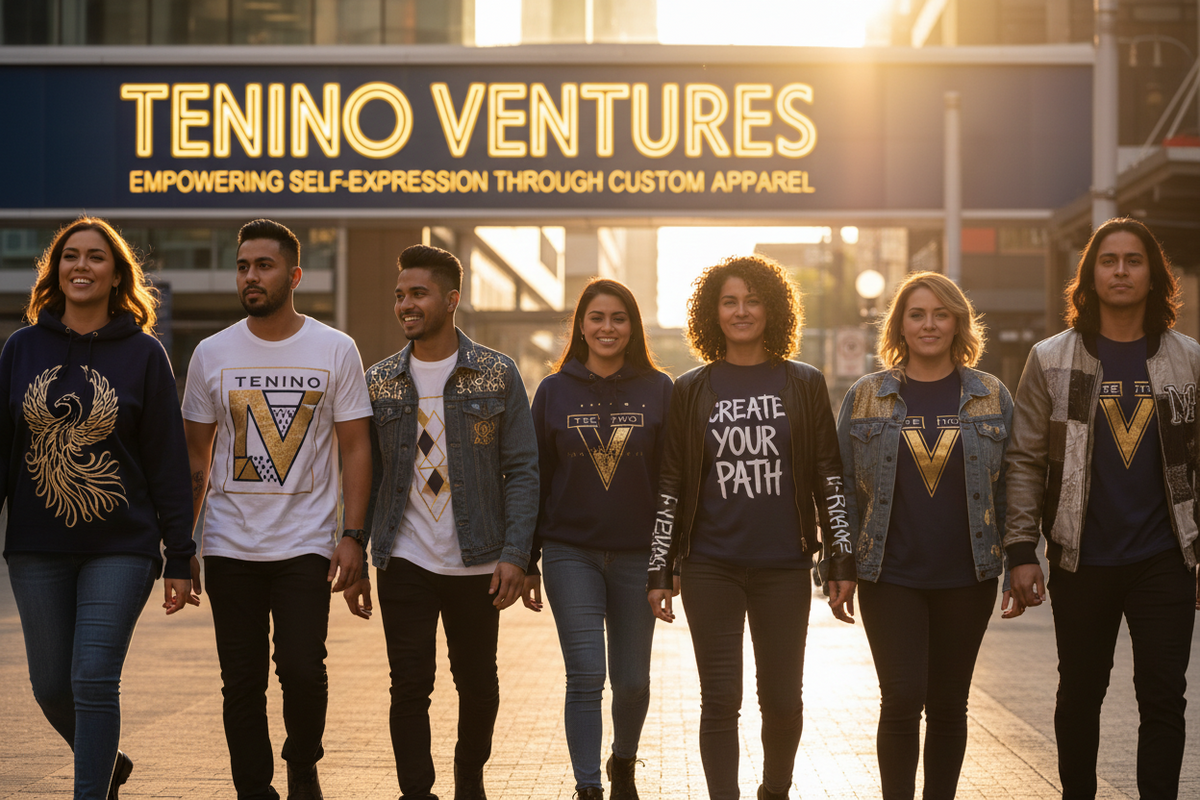
That's exactly the model Tenino Ventures runs on. Tenino Ventures designs all-over print hoodies and graphic tees on a print-on-demand basis, so a niche gaming-aesthetic drop can go live without minimum order quantities or dead stock risk. Designs can stay narrow and specific, built for one exact sub-aesthetic, instead of getting watered down to sell to everyone.
For anyone shopping gaming-coded fashion right now, indie or print-on-demand labels are usually the better fit over big retailers. They move faster, take more design risks, and don't need a design to appeal to a mass market before it gets made.
Building Your Gamer-Coded Wardrobe: Styling and Next Steps
Building a gamer-coded wardrobe isn't about wearing every neon piece you own at once. Pick one anchor per outfit, a glitch-print hoodie or an all-over print tee, then keep everything else neutral. Black jeans, plain cargos, or a dark jacket let the graphic do the work.
Layer a bold graphic hoodie under a plain jacket for daytime, then let it stand alone at night. Mix in one neutral accessory, like a black cap or plain sneakers, so the outfit reads as intentional style instead of a full costume moment.
The point isn't to look like you walked out of a game. It's to look like gaming shaped your taste, the same way any other subculture might. Explore aesthetic apparel for gaming communities for more ways to build out a look with real personality behind it.
If you're ready to build that wardrobe, shop all-over print hoodies or browse the hoodie collection for pieces designed around the aesthetic, not the license. Sign up for drop alerts and join a crowd that dresses like gaming shaped them, not one that just bought the t-shirt.

Leave a comment
This site is protected by hCaptcha and the hCaptcha Privacy Policy and Terms of Service apply.